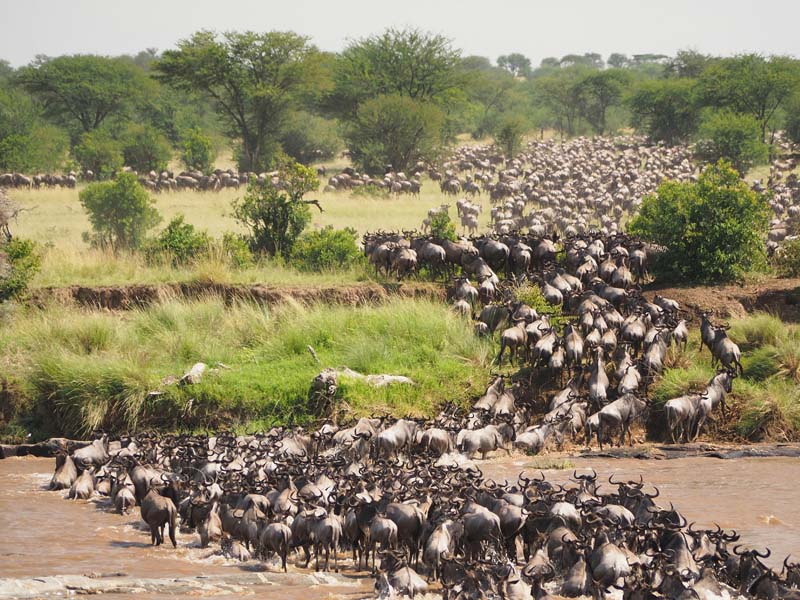
The Ngorongoro Crater is often described as Africa's Garden of Eden — a massive, unbroken volcanic caldera 19 kilometres wide and 600 metres deep, sheltering one of the densest concentrations of wildlife anywhere on the continent.
The Crater Floor
Descending into the crater feels like entering another world. The 260 square kilometres of crater floor supports roughly 25,000 large animals, including all of the Big Five. Critically, the crater is one of the best places in Africa to spot the endangered black rhino, as a protected population of around 26 individuals lives here.
Wildlife You Can Expect
- Lions – Several prides roam the crater, with the males famously distinctive for their dark, flowing manes
- Elephants – Mostly large bulls descend into the crater; females prefer the highland forests
- Black Rhino – Rare and shy, but sightings are relatively reliable compared to anywhere else
- Flamingos – Lake Magadi in the crater floor turns pink with thousands of lesser flamingos
Best Time to Visit
The crater is accessible year-round, but the dry season (June–October) offers clearer sightlines and animals congregate near water sources. January–March is also excellent for predator activity.
Practical Tips
Only a limited number of vehicles are allowed on the crater floor at any one time. Arrive early (gates open at 6 am) for the best experience. Picnics on the crater floor are permitted at designated sites — pack your lunch for a truly unforgettable meal.